Word Connect Master
- 4.6
- Rating
- 100.00K
- Installs
- Free
- Price
 Analysis by App-foxy
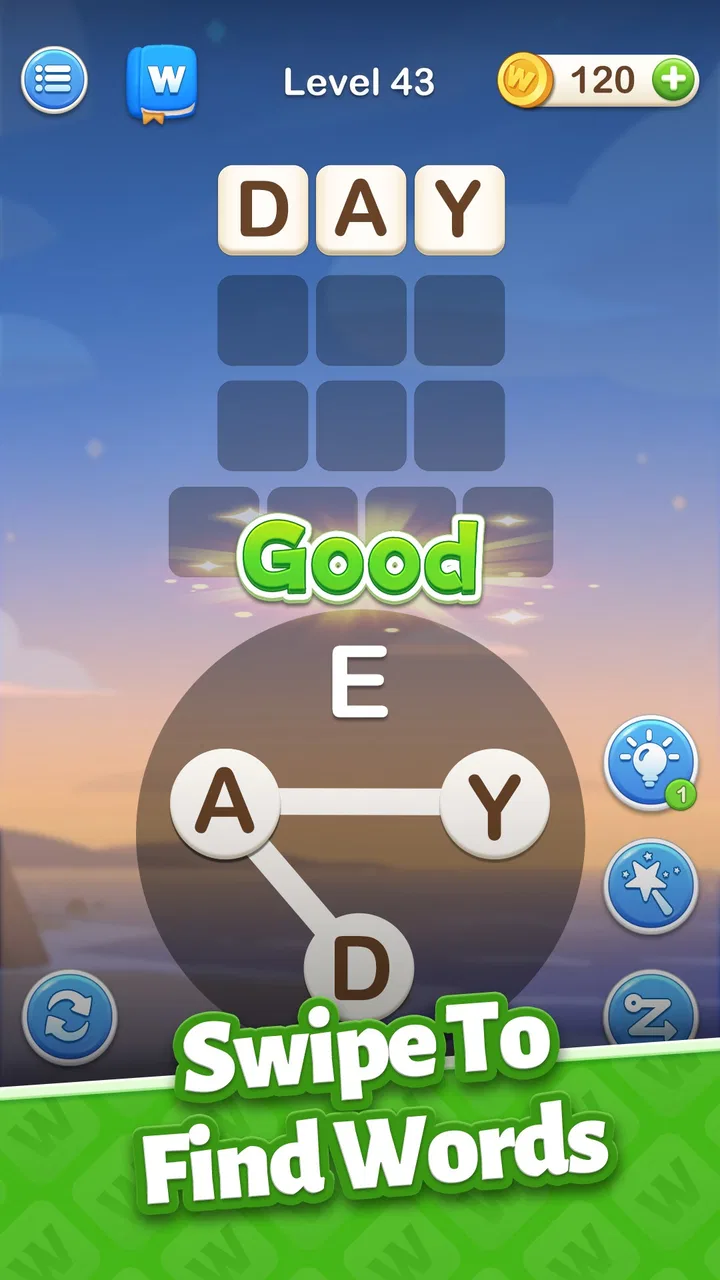
Word Connect Master is the kind of word game I can open for a few minutes without needing to prepare for a complicated session. Its basic idea is easy to understand: connect letters to form words, then keep working through the puzzle in front of you. That straightforward design makes it approachable, but it also means the quality of the experience depends heavily on how fair and satisfying the individual puzzles feel.
I reviewed it as a free word game from SATORISYS PLAY, aimed at Everyone and available for devices running Android 7.1 or later. The current version is 1.1.7, and the game has reached over 50 thousand installs. Those figures suggest that it has found a modest audience, while the average score of 3.9 from roughly 130 ratings gives a more mixed impression: people are clearly finding something enjoyable here, but this is not a universally loved word puzzle.
How the word-connecting format feels in everyday play
The main appeal is the low barrier to entry. You do not need to learn a large rule set before starting, and the short-puzzle format suits moments when I am waiting for a bus, taking a break from work, or trying to stay awake during a quiet evening. The game’s store summary promises the chance to become a word master, but I found the real attraction to be more modest and practical: it gives me a small mental task that I can pick up and put down easily.
You May Also Like

 Blood Strike: 2.5 Anniversary
Blood Strike’s Loadouts Turn Every Drop Into a Tactical Gamble
A close look at Blood Strike’s custom loadouts: how fast access to signature weapons reshapes its battle royale rhythm, rewards preparation, and narrows the gap between fights.

 Pandora - Music & Podcasts
Pandora’s Music Is Easy to Start, but Harder to Recover
Pandora’s strength is its low-effort path from a seed to a station. Its weak spot is how much confidence it asks you to place in connection, setup, and quiet recovery.

 8 Ball Pool
 Is Built on Rivalries, Rematches, and Routine
A close look at the rivalries, rematches, shared routines, and unanswered safety questions that turn a quick pool match into a persistent mobile community.

 Samsung Music
’s Quiet Strength Is Playing What You Already Own
Its reach comes less from spectacle than from dependable access to a personal library. That simplicity is both the app’s strongest retention engine and its ceiling.

 AccuWeather: Weather Radar
AccuWeather Review: A Quick, Clear Forecast for Everyday Decisions
For everyday plans, the best forecast is the one you can understand quickly. AccuWeather makes rain timing, radar, and local conditions easy to act on, with a few trade-offs.

 Hill Climb Racing
Why Hill Climb Racing Still Turns Crashes Into One More Run
A tiny car, a bumpy hill and one more upgrade: Hill Climb Racing keeps resurfacing because its simple chaos makes every near-miss feel personal.
More From Our News Desk
View All News


Word games work best when the first few moves feel obvious enough to build confidence, while later answers require a little more thought. That balance matters more here than flashy presentation. When I can spot a short word quickly and then rearrange the remaining letters to uncover a less obvious answer, the game creates a pleasant sense of progress without demanding a long uninterrupted session.
There is also a useful difference between recognizing a word and actively searching for one. A familiar word may be sitting in front of me, but I still have to notice the possible letter order. That makes the game suitable for casual vocabulary practice, although I would not treat it as a structured language-learning tool. It encourages observation and recall, but its purpose is entertainment rather than lessons, explanations, or formal study.
My preferred way to play is in short bursts. I try to solve the obvious combinations first, then pause before making random guesses. This is more efficient than repeatedly swiping through every possible arrangement, and it makes the solving process feel deliberate. If you approach each puzzle as a small pattern-recognition exercise instead of a race, the simple format has more staying power.
What makes the progression enjoyable
A good word puzzle should make me feel that I solved something rather than merely waited for the answer. Word Connect Master can deliver that feeling when a puzzle contains a couple of familiar words alongside one answer that requires a different way of looking at the letters. The satisfaction comes from the moment the remaining combination becomes visible.
One useful habit is to separate likely words from speculative ones. I first look for common short words, because they reduce the number of letters I need to consider. Then I examine the unused letters as a group rather than staring at the entire puzzle repeatedly. This simple workflow prevents the game from becoming a cycle of unfocused tapping and is one of the best ways to get more value from its basic design.
Another practical tip is to avoid assuming that the longest-looking word is always the key. Short answers can change how the remaining letters appear, and a word that seems unimportant may be the clue that unlocks the rest. I found that treating every valid-looking combination as useful, rather than chasing only impressive words, produced steadier progress.
The trade-off is that a minimalist word game can start to feel repetitive if its puzzles do not introduce enough variation. Since the experience is built around connecting letters, anyone looking for animated characters, a story, or a broad collection of game modes will probably find it too narrow. Its strength is concentration, not variety.
Fairness, pressure, and the question of spending
Because this is a free game, many readers will reasonably want to know whether progress feels tied to spending. I approached it with that concern in mind, but I do not want to invent a purchase system, item prices, or specific monetization rules that are not established. The responsible conclusion is narrower: the game is free to start, while the exact way any optional spending affects play should be checked directly on the device before committing money.
That distinction matters. A free download does not automatically mean a completely unrestricted experience, and a game can remain enjoyable even if it offers optional purchases. What I look for is whether the player feels pushed into paying after making normal mistakes. In a word game, pressure can come from limited attempts, forced waiting, or hints that become essential rather than helpful. I would pay attention to those moments during the first several sessions instead of assuming the title is either perfectly generous or aggressively commercial.
My advice is to play without spending at first and learn the puzzle rhythm. If you can make consistent progress by slowing down, organizing the letters, and accepting that some answers take time, there is less reason to treat hints as mandatory. If a particular puzzle stalls you, taking a break is often better than making a rushed decision. The value of a hint depends on whether it restores enjoyment or simply removes the part of the game you came to experience.
For parents, the Everyone age classification makes the game broadly approachable, but that label should not be confused with a complete explanation of purchasing behavior. If a child uses the device, I would still review the device’s purchase controls and play alongside them initially. That is sensible for any free game, especially when the child may not distinguish between playing and confirming a transaction.
Is the challenge competitive or mostly personal?
Word Connect Master is best judged as a personal puzzle experience unless the current version clearly presents competition on your device. I would not choose it expecting a deep ranking system, live matches, or a carefully balanced multiplayer environment. The important fairness question here is therefore less about defeating other players and more about whether the puzzles give everyone a reasonable chance to solve them without artificial pressure.
That makes the game suitable for people who enjoy improving their own solving habits. You can compete against your previous patience, attention, and vocabulary rather than against someone with more free time or a larger spending budget. For me, that is a positive quality: a quiet word puzzle does not need to turn every session into a contest.
At the same time, players who want a strong competitive framework should probably choose a dedicated word battle game instead. Those alternatives usually make the contest itself central, with clearer matchmaking or score-based goals. Word Connect Master’s simple letter-connection concept is more comfortable for relaxed solo play, but it is not the obvious choice for someone seeking social rivalry.
Fairness also depends on the vocabulary accepted by the puzzle. A word game can feel frustrating when an answer seems reasonable but is not recognized, or when the intended solution relies on a word that is unfamiliar to the player. I would not call that unfair automatically; puzzle designers need a defined vocabulary. Still, it is a real trade-off. The game is more enjoyable for players who are comfortable experimenting with common word forms and less satisfying for anyone who expects every plausible answer to count.
Where it fits among familiar word-game alternatives
Compared with a crossword, this is more immediate because you do not have to interpret a clue or read a full grid. That makes it better for a quick break and less rewarding for someone who enjoys general knowledge, layered clues, and a larger sense of completion. Compared with a word-search puzzle, it asks for more active rearrangement and less visual scanning across a fixed board.
It also differs from a spelling-learning app. Those products usually explain mistakes, introduce vocabulary, or organize practice around a language goal. Here, the pleasure comes from finding combinations. I would recommend it to someone who wants casual mental exercise, not to a student who needs pronunciation help, definitions, or a measurable study plan.
Against competitive word games, its advantage is calmness. You can focus on the letters without worrying about an opponent moving faster. Its disadvantage is that the experience may feel less exciting once the novelty fades. This is a good example of a game that can be exactly right for a specific mood: when I want a quiet challenge, the uncomplicated structure helps; when I want variety or social energy, I would choose something else.
Small strategies that improve the experience
My first recommendation is to use a two-pass method. On the first pass, find the words that appear immediately. On the second, inspect the letters left behind and look for endings, common beginnings, and alternate arrangements. This keeps the puzzle manageable and reduces the temptation to swipe randomly.
Second, read the available letters aloud when you are stuck. That sounds simple, but hearing the sounds can reveal a familiar combination that visual scanning misses. It is particularly helpful when the letters look interchangeable on screen. I would use this as a mental reset rather than as a guarantee of an answer.
Third, decide in advance how much effort a puzzle deserves. If I have only a few minutes, I try a focused search and then stop rather than turning a small game into an irritating obligation. If I am playing at home, I may return to the same puzzle after doing something else. A short break can be more useful than repeated guessing because it changes the pattern I notice.
These habits reveal an important strength: the game can reward patience without requiring a long session. They also reveal a weakness: if you dislike trial and error, even a small vocabulary puzzle may feel restrictive. The game does not replace a rich crossword or a language course; it occupies the lighter space between them.
What I would check before making it a regular game
I would begin by checking how the game handles a difficult puzzle and whether its optional assistance feels reasonable. I would also watch for interruptions that break concentration. Those details affect long-term trust more than the basic ability to connect letters, because the core mechanic is already familiar.
I would then see whether progress remains comfortable without purchases. Since the game is free, this is the most practical test of value. A title that gives me enjoyable short sessions at no cost can be worthwhile even if it is simple. A title that repeatedly turns normal play into a spending decision would be a poor fit for me, regardless of how polished the puzzles feel.
The current version is 1.1.7, so I would keep the app updated through the normal store process and reassess the experience after changes. Updates can alter pacing, interface behavior, or the balance between challenge and assistance. I would not assume that a first session represents every future version.
There are also a few personal questions worth answering through use rather than guesswork. Do the accepted words match your vocabulary? Does the difficulty feel motivating or arbitrary? Can you enjoy five minutes without feeling rushed? And does the game remain pleasant when you solve slowly? Those answers will tell you more than the short store description because word-game satisfaction is highly dependent on pacing and word selection.
My trust verdict for casual players
After spending time with Word Connect Master, I see it as a modest, accessible word game rather than a complete vocabulary platform or a competitive event. SATORISYS PLAY has chosen a familiar format that works well for quick sessions, and the Everyone rating makes it easy to consider for a broad audience. The free entry point is welcome, but I would still make purchase controls and the behavior of optional assistance part of my initial check.
The game is a good match for someone who likes rearranging letters, prefers solo challenges, and wants something that can fit into a spare moment. It is especially useful when you want a small focus exercise without a story, complicated controls, or a large time commitment. My strongest practical recommendation is to play methodically: solve the obvious words, study what remains, and take a break before treating a stubborn puzzle as a reason to spend.
I would skip it if you need detailed language instruction, rich multiplayer competition, or a constantly changing set of activities. I would also be cautious if repeated hints, waiting, or purchase prompts make you uncomfortable, since the free label alone does not answer every question about spending. For the right player, though, its simplicity is the point. My final view is that Word Connect Master is worth trying as a low-pressure word puzzle, provided you judge its long-term fairness by your own first sessions rather than by the promise of becoming a master.
FAQs for Word Connect Master
01What is Word Connect Master and how does it work?
Word Connect Master is a word puzzle game designed to challenge and enhance your vocabulary skills. Players connect letters in various combinations to form words, progressing through increasingly difficult levels. The game offers hints and rewards to keep players engaged and motivated as they advance.
02Is Word Connect Master free to play?
Yes, Word Connect Master is free to download and play. However, it offers in-app purchases that can enhance the gaming experience by providing additional hints or removing ads. These purchases are optional and not necessary to complete levels, allowing players to enjoy the game without spending money.
03What are the system requirements for installing Word Connect Master?
To install Word Connect Master, Android users need a device running at least Android 5.0, while iOS users need iOS 9.0 or later. The game is optimized for smartphones and tablets, ensuring smooth gameplay across a variety of devices with these specifications.
04Are there any ads in Word Connect Master?
Yes, Word Connect Master contains ads that appear between levels or when using certain features. While these ads can be removed through in-app purchases, they are generally unobtrusive and do not significantly disrupt gameplay for users who choose not to purchase ad-free access.
05Can I play Word Connect Master offline?
Yes, Word Connect Master can be played offline, making it a great option for players who want to enjoy the game without an internet connection. However, some features, such as purchasing in-app items or accessing online leaderboards, require an internet connection.
Pros
- Engaging puzzles improve vocabulary.
- Daily challenges keep users motivated.
- Offline mode for uninterrupted play.
- User-friendly interface with smooth navigation.
- Regular updates with new content.
Cons
- Ads can be intrusive during gameplay.
- Limited hints without purchase.
- Repetitive levels may bore some users.
- No multiplayer or community features.
- Battery consumption is relatively high.

Word Connect Master
Gallery